Electricity Unit Price in Pakistan 2026: Tariff Slabs, Latest Rates & Consumer Guide
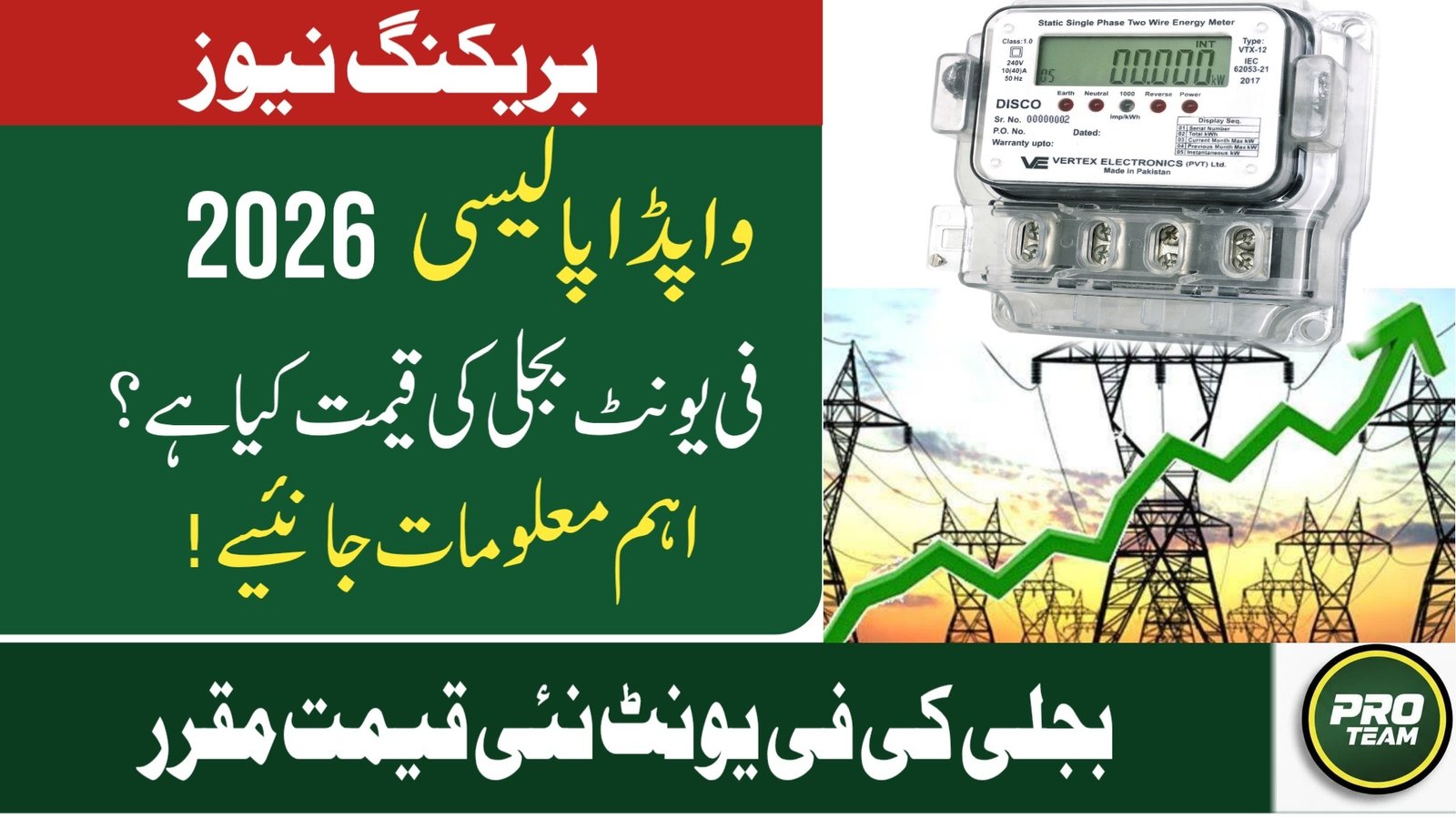
The electricity unit price in Pakistan 2026 remains a major concern for households and businesses as rising utility costs affect monthly budgets. In 2026, the National Electric Power Regulatory Authority (NEPRA) finalized the national electricity tariff structure, setting a uniform national base tariff around Rs 33.38 per kilowatt-hour (unit) for residential consumers. This structured tariff system uses slab-wise pricing to protect low-usage households while charging progressively higher rates for heavier consumption, helping manage demand and promote energy efficiency.

Latest Update 2026 on Electricity Pricing
In the latest update for 2026, the power regulator implemented minor adjustments to provide consumer relief amid economic pressures:
- Reduction in National Base Tariff: The average electricity tariff was slightly reduced to around Rs 33.38 per unit for 2026 compared to previous cycles, offering modest relief to consumers.
- Enhanced Slab Protection: Lifeline and protected consumer slabs were reinforced to ensure lower-income households pay significantly lower per-unit rates compared with general residential tariffs.
These updates aim to balance affordability for households with the financial sustainability of the power sector while promoting fair billing and efficient consumption.

Electricity Unit Price Table 2026 – Domestic Tariff Slabs
The table below shows the latest slab-wise electricity unit prices for domestic consumers in Pakistan for 2026. Slab rates increase with consumption to encourage efficient usage and protect low-use households.
| Consumption Category | Monthly Units Consumed | Price per Unit (Rs) |
|---|---|---|
| Lifeline Consumers | Up to 50 | 3.95 |
| Lifeline (51–100) | 51–100 | 7.74 |
| Protected Domestic | 1–100 | 10.54 |
| Protected (101–200) | 101–200 | 13.01 |
| Non-Protected Domestic | 1–100 | 22.44 |
| Non-Protected (101–200) | 101–200 | 28.91 |
| Standard Domestic | 201–300 | 33.10 |
| Mid-Use | 301–400 | 37.99 |
| High Usage | 401–500 | 40.22 |
| Large Use | 501–600 | 41.62 |
| Upper Domestic Use | 601–700 | 42.76 |
| Very High Use | Above 700 | 47.69 |
This progressive tariff design keeps per-unit cost low for low-usage consumers and increases for higher consumption to promote savings.

Why Electricity Prices Matter in 2026
Electricity costs significantly impact family budgets and business operations. Understanding the tariff structure in Pakistan 2026 helps consumers plan usage and manage bills without surprises. The slab-wise system ensures that low-volume users are protected while heavier users share a fair contribution toward system costs.
What These Slabs Mean for Your Bill
- Lifeline & Protected Slabs: These are designed for low-use and essential households, keeping per-unit cost very low to support affordability.
- Standard & Higher Slabs: As monthly consumption increases beyond basic needs, the per-unit price increases to reflect higher system costs and discourage wasteful usage.
This tiered structure helps promote energy conservation and ensures a more equitable distribution of electricity costs.
Most Informative Tariff Snapshot 2026
| Category | Range (Rs per Unit) | Consumer Impact |
|---|---|---|
| National Base | ~33.38 | Core residential average used for billing calculations |
| Lifeline | 3.95–7.74 | Lowest cost for basic usage |
| Protected | 10.54–13.01 | Low-usage support slabs |
| Non-Protected | 22.44–28.91 | Mid-tier consumer charges |
| Heavy Use | 40+ | Highest charges for high consumption |
This snapshot gives a balanced view of how per-unit rates vary based on usage categories.
Factors That Affect Your Final Bill
Your final electricity bill may include charges beyond the base per-unit price depending on the billing cycle and distribution company:
- Fuel Price Adjustment (FPA): A variable component based on generation cost changes.
- Taxes & Duties: Government levies that increase the effective cost.
- Fixed Charges: Monthly fixed charges based on your connection category.
These components can raise the effective cost per unit you actually pay.
Tips to Reduce Your Electricity Cost
To keep electricity bills manageable in 2026:
- Use energy-efficient appliances (LEDs, efficient refrigerators, ACs).
- Avoid high consumption during peak billing hours.
- Monitor usage regularly to stay within lower tariff slabs.
- Consider solar or net-metering options where feasible to reduce grid dependence.
These practices help reduce total units consumed and lower monthly bills.
Electricity Price Trends and Consumer Behavior
Electricity prices in Pakistan are influenced by fuel costs, generation mix, and policy decisions. Consumers who adjust usage patterns based on tariff slabs tend to see lower bills and better budgeting outcomes.
Official Regulatory Source
For the most accurate and official information on tariff notifications, consumers can visit the regulator’s website:
https://nepra.org.pk
This official portal contains tariff orders, consumer guides, and updates for all electricity pricing decisions.
Conclusion
Understanding the electricity unit price in Pakistan 2026 is essential for every consumer. With a uniform average base tariff of about Rs 33.38 per unit and a structured slab system that protects low-use households, the 2026 tariff framework seeks to balance affordability with sustainability. By knowing your slab and using energy wisely, you can better manage household or business electricity costs.
Latest Updates
 Pakistan Accelerated Vehicle Electrification 2025 – Transforming Pakistan’s Transport Future
 Current News: Nigehban Card Distribution Started in Different Districts in Punjab – 2026
 How to Check EOBI Status by CNIC Online in Pakistan 2026 – Complete Pension Verification Guide
 How To Pay NADRA Fee Through Easypaisa Or JazzCash – Complete 2026 Guide
 Breaking Update: Benazir Nashonuma Program Center 2026 – Complete & Updated Guide for Pakistan
 Registration of Ramzan Rashan Relief Package Through 8070 Web Portal 2026 – Complete Online Guide for Families